Introduction
The way businesses operate is changing rapidly. With the rise of remote work, hybrid models, and fast-paced digital transformation, companies are rethinking how they manage their technology needs. Instead of investing heavily in buying IT devices, many businesses are shifting towards renting laptops, desktops, and other equipment. This approach is cost-effective, flexible, and perfectly aligned with the evolving demands of the modern workplace.
The Changing Workplace Environment
The workplace today is no longer confined to traditional office spaces. Employees work from home, co-working hubs, and even while traveling. To support this dynamic environment, companies need reliable IT infrastructure that can adapt quickly. Buying devices in bulk may seem like a long-term solution, but it often creates challenges such as high upfront costs, frequent upgrades, and device maintenance. Renting IT devices solves these problems while providing businesses with the agility they need.
Cost-Effectiveness and Budget Control
One of the biggest reasons businesses prefer renting IT devices is financial flexibility. Purchasing devices requires a large upfront investment, which can strain budgets, especially for startups and small enterprises. In contrast, renting eliminates heavy capital expenditure and converts it into manageable operational costs. Companies can allocate funds to other critical areas like marketing, research, and employee training. Renting also includes maintenance services, reducing hidden expenses.
Access to Latest Technology
Technology evolves faster than ever. Devices that are cutting-edge today may become outdated within a year. For businesses that need to stay competitive, having access to the latest laptops, desktops, and IT accessories is crucial. Renting gives companies the advantage of upgrading to newer models without additional financial burden. Instead of being stuck with old hardware, they can switch to advanced devices easily and keep their teams productive.
Flexibility and Scalability
Every business experiences phases of growth, downsizing, or temporary projects. Renting IT devices provides the flexibility to scale up or down as per requirement. For instance, during peak seasons or when onboarding new employees, companies can rent additional laptops or desktops. Once the demand reduces, they can return the extra devices. This scalability makes renting a practical solution for businesses with fluctuating workforce sizes.
Hassle-Free Maintenance and Support
Another major advantage of renting IT devices is the convenience of technical support. When businesses buy devices, they are responsible for maintenance, repairs, and upgrades. This not only increases costs but also takes up valuable time. Rental service providers usually offer technical assistance, quick replacements, and regular maintenance, ensuring smooth operations. Businesses can focus on growth instead of worrying about IT issues.
Sustainability and Eco-Friendly Practices
Sustainability is a growing priority for modern businesses. Renting IT devices supports eco-friendly practices by extending the lifecycle of devices. Instead of adding to electronic waste, rented devices are refurbished and reused. This reduces the environmental footprint and aligns with corporate social responsibility goals. Companies that care about sustainability find renting an excellent way to balance productivity with responsibility.
The Future of Work and IT Rentals
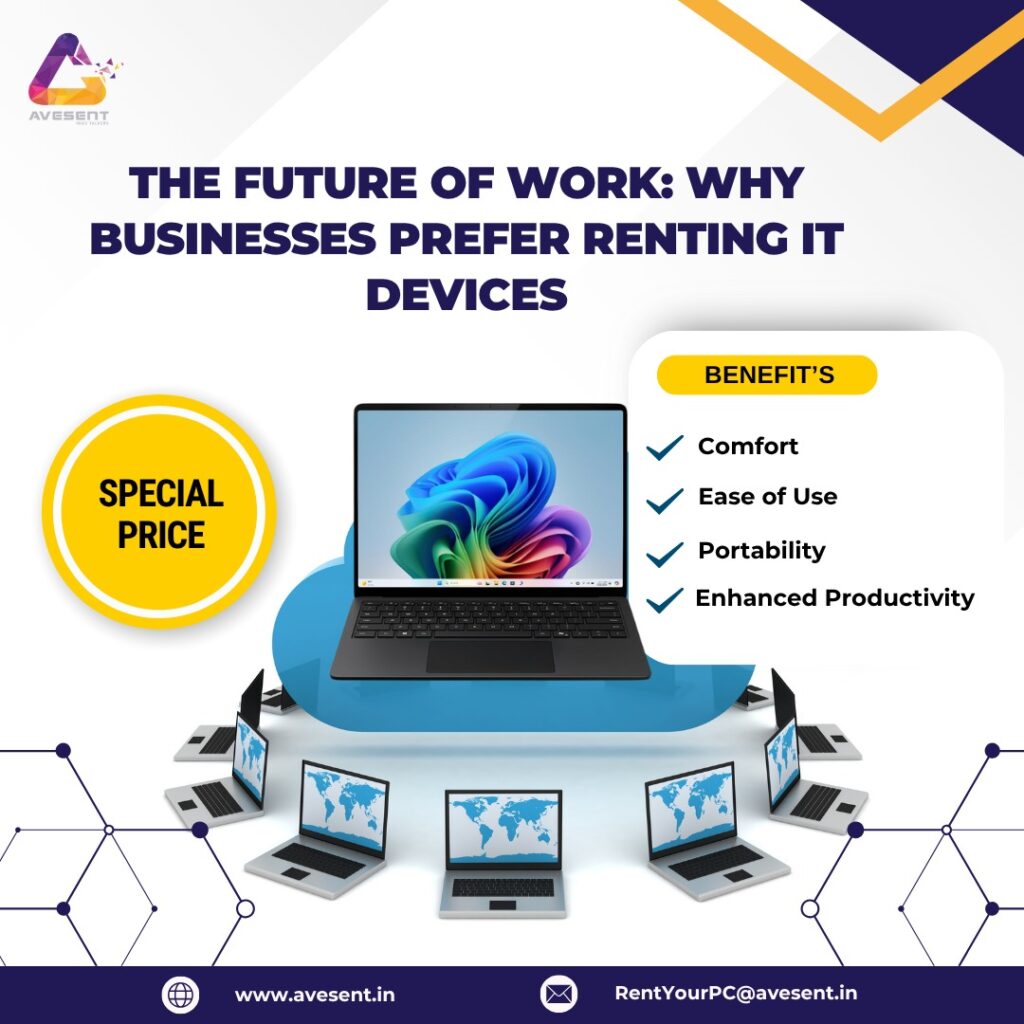
As the future of work continues to evolve, renting IT devices will play an even greater role. Hybrid workplaces, gig economy models, and technology-driven projects require flexible IT solutions. Renting empowers businesses to stay ahead of change without heavy investments. From startups to established enterprises, companies across industries are recognizing the long-term benefits of this approach.
Conclusion
The future of work is all about flexibility, agility, and cost-efficiency. Renting IT devices provides businesses with a smart solution to keep up with rapid technological advancements and changing workforce needs. It reduces financial strain, offers access to the latest technology, ensures hassle-free maintenance, and supports sustainable practices. For businesses looking to thrive in the digital era, renting IT devices is not just an option—it is the way forward