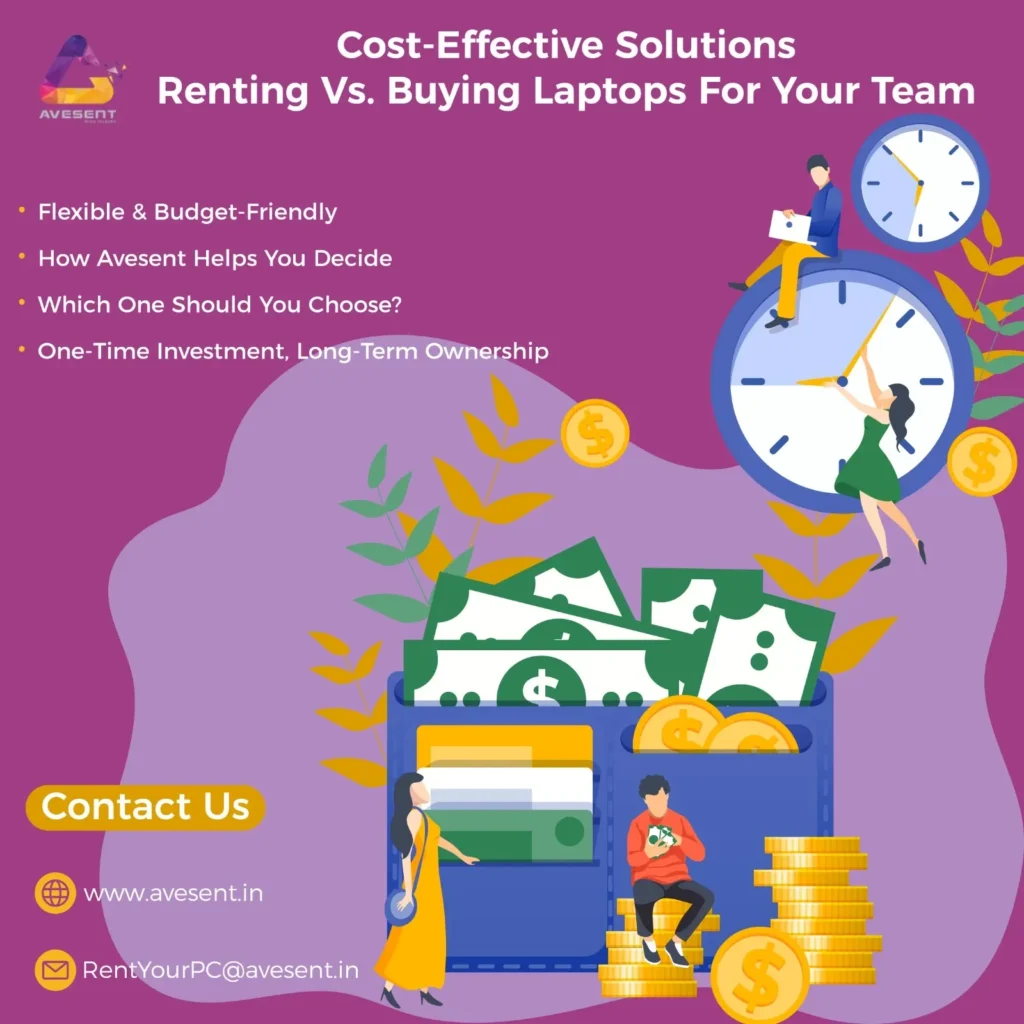
In today’s fast-paced digital work environment, having the right tech setup is essential. Whether you’re a startup with a growing team or a large organization expanding operations, one important decision stands out — should you rent laptops for your team or buy them outright?
At Avesent, we often get this question from businesses across India. The answer isn’t one-size-fits-all. It depends on your company’s needs, growth plans, and budget flexibility. Let’s break down both options so you can decide what’s best for your organization.
Buying Laptops: One-Time Investment, Long-Term Ownership
Buying laptops is a traditional approach. It gives you complete ownership of the devices, which can be an advantage for businesses looking for long-term use.
Pros of Buying Laptops:
One-Time Payment: You pay once and own the device. There are no recurring charges.
Customization: You can choose your brand, specs, and configuration without restrictions.
Asset Building: Laptops become a part of your company’s fixed assets, improving your balance sheet.
No Return Policy: You don’t have to worry about returning the device once the project ends.
Cons of Buying Laptops:
High Initial Cost: Bulk purchasing can tie up your capital, especially for startups.
Depreciation: Like any tech device, laptops lose value quickly.
Maintenance Responsibility: You’re responsible for all updates, repairs, and replacements.
Obsolescence: Technology changes rapidly; in 2–3 years, your devices may be outdated.
Renting Laptops: Flexible and Budget-Friendly
Laptop rentals are becoming more popular among businesses, especially those operating in dynamic or fast-changing environments.
Pros of Renting Laptops:
Low Upfront Cost: Pay monthly or quarterly, saving your cash flow.
Latest Technology: Access to the most recent models and configurations.
No Maintenance Hassles: Most rental providers, like Avesent, offer technical support and quick replacements.
Scalability: Easily scale up or down as your team changes.
Tax Benefits: Rental expenses can be claimed as business expenses, reducing taxable income.
Cons of Renting Laptops:
Recurring Costs: Over the long term, you may end up paying more than the purchase price.
Limited Ownership: You don’t own the asset, and customization might be limited.
Contract Terms: Some providers may lock you into fixed-term agreements.
Which One Should You Choose?
If you are:
A startup with a tight budget and unsure about your team’s long-term size — Renting is ideal.
A large enterprise needing short-term laptops for remote teams or contract workers — Renting provides flexibility.
A well-funded company with a stable workforce and long-term infrastructure plans — Buying might be better.
How Avesent Helps You Decide
At Avesent.in, we offer custom laptop rental plans tailored for businesses of all sizes. Whether you need 10 laptops for a new project or 100+ for an expanding team, we ensure:
- Fast delivery across India
- Latest hardware and software setups
- On-demand tech support
- Affordable pricing for short and long-term needs
We also offer consultation to help you determine the best cost-effective IT solution for your business. With flexible rental agreements and top-tier devices, Avesent helps you grow without worrying about large tech investments.
Conclusion
Choosing between renting and buying laptops boils down to your business goals, budget, and flexibility needs. For many growing businesses in India, renting laptops offers a smarter, more scalable approach to equipping their teams without burning capital.
Let Avesent support your business with our trusted laptop rental services — because the right tools shouldn’t break your budget.